
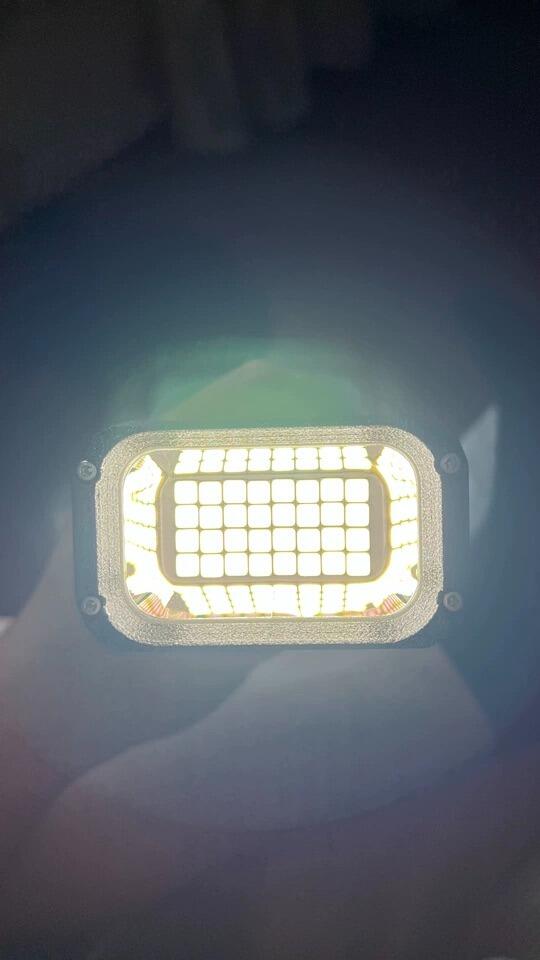
Recommended main control and power board files.
Gerber ZIPBOMPNPPDF

Forge 60


Forge 60 is a compact high-output work light built around 60W / 10,000 lm peak output, active cooling, 45W Type-C charge and discharge, and a two-cell 21700 battery system.
Default configuration: Forge 60 ships with Seoul Semiconductor STW0L8PA 6V 5050 emitters in 5700K with approximately CRI 70.
Custom configurations: Contact us if you need a different emitter type or color temperature. Custom options are subject to component availability.
Without Battery (default): No battery pack is included. Forge 60 requires two matched high-discharge 21700 lithium-ion cells configured as a 2S pack (7.2-7.4V nominal / 8.4V fully charged) with a compatible 2S protection board. Use cells with sufficient discharge capability for the selected output level.
With Battery: Includes one compatible two-cell 21700 battery pack.
Forge 60 is specified with visible build data: 60W / 10000 lm output, 45W Type-C charge and discharge, 1.0mm main PCB, 1.6mm LED board, IP2369 power IC, active cooling, and two power-type 21700 cells.
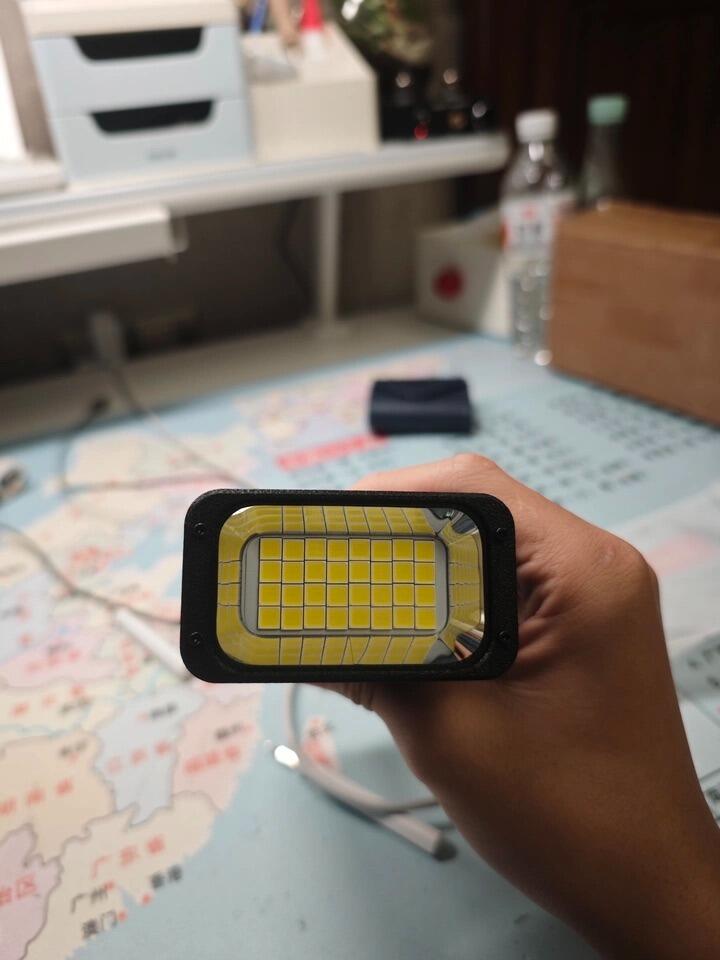
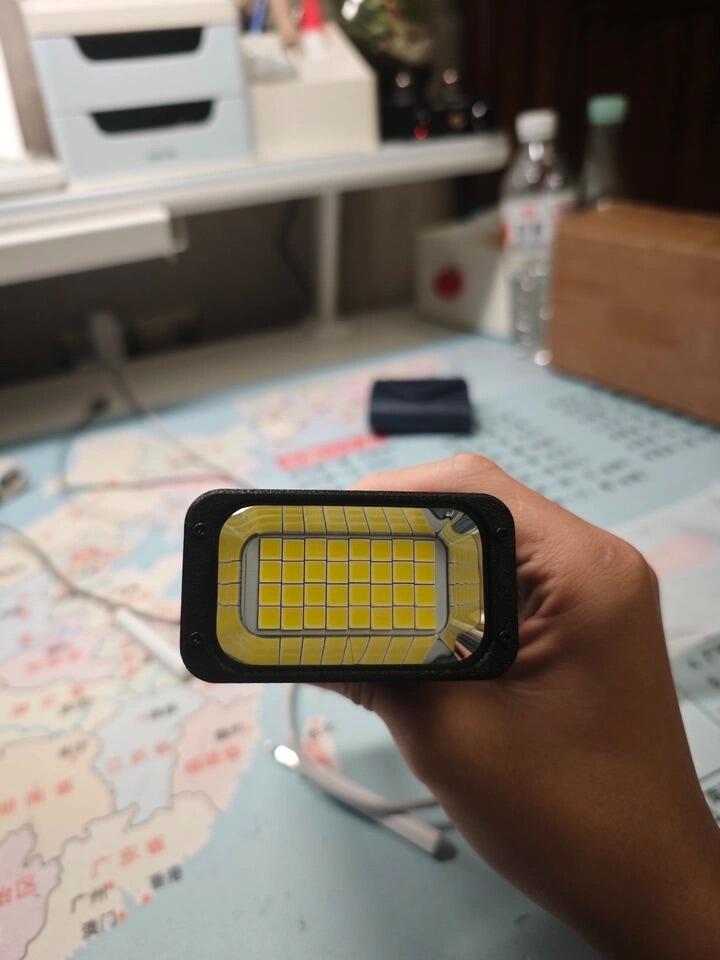
Default LED configuration: Seoul Semiconductor STW0L8PA 6V 5050 emitters, 5700K color temperature, and approximately CRI 70.
Custom LED configurations: Contact us if you need a different emitter type or color temperature. Custom options are subject to component availability.
Forge 60 ships as a large-part DIY kit, not as a fully assembled sealed unit. The package contains large PETG-FG 3D-printed body parts and core modules for simple final assembly. Checkout and order processing run through Shopify. Order updates, shipping notices, and customer support should use the contact details provided at checkout. Return requests are reviewed against the final order condition and applicable store policies.
Verified product geometry
Complete Forge 60 assemblyShips as separated parts. Forge 60 is not a fully assembled light.
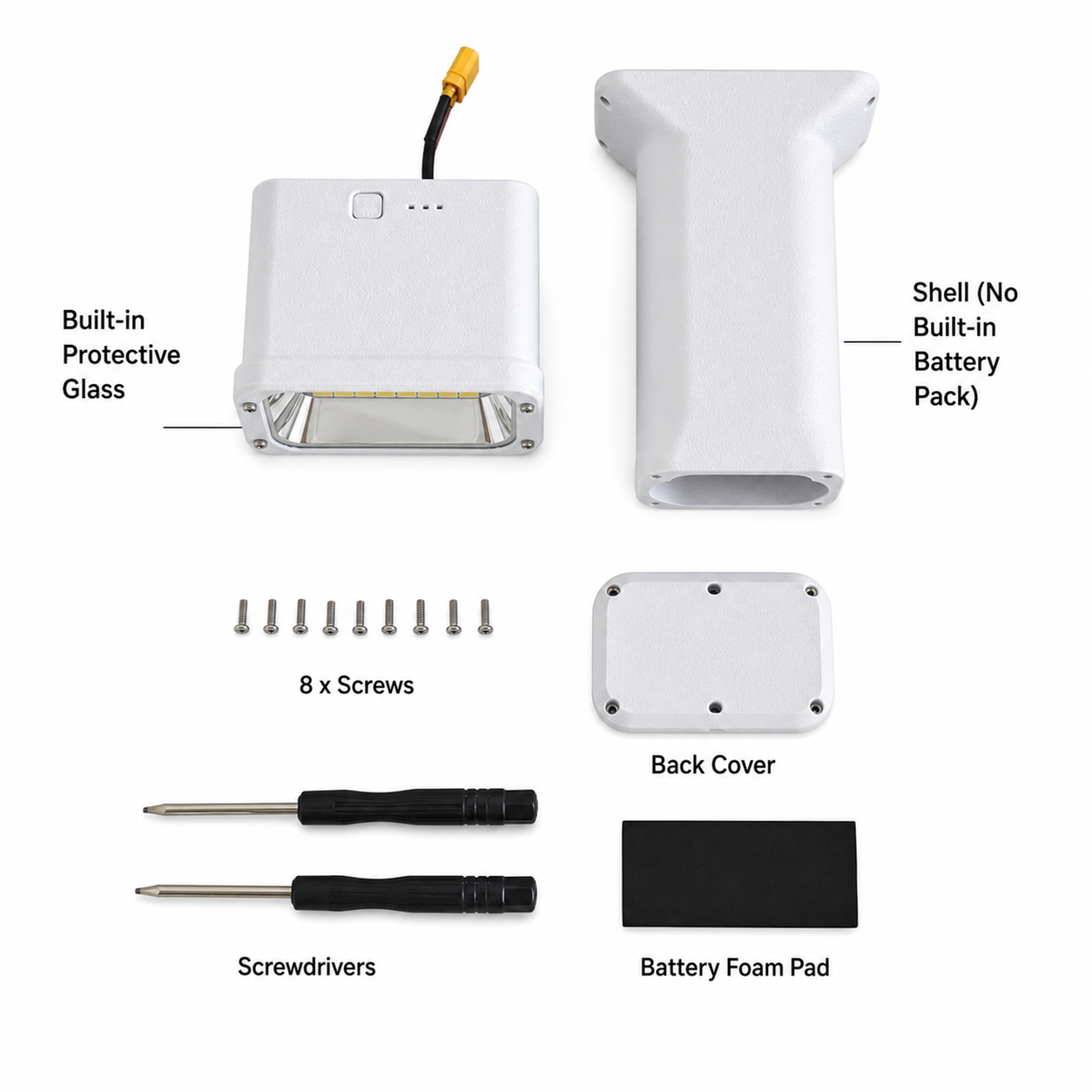
Not a fully assembled light. Ships as separated PETG-FG 3D-printed parts and core modules.
Before you order
No. Forge 60 ships as a separated parts kit for simple final assembly.
The default Without Battery option does not include a battery pack. It requires two matched high-discharge 21700 lithium-ion cells configured as a 2S pack (7.2-7.4V nominal / 8.4V fully charged) with a compatible 2S protection board. The With Battery option includes one compatible two-cell battery pack.
No soldering is required for normal final assembly.
A screwdriver is required for assembly.
The kit is designed for simple final assembly: seat the body parts, fit the front glass, close the rear cap, and tighten the screws.
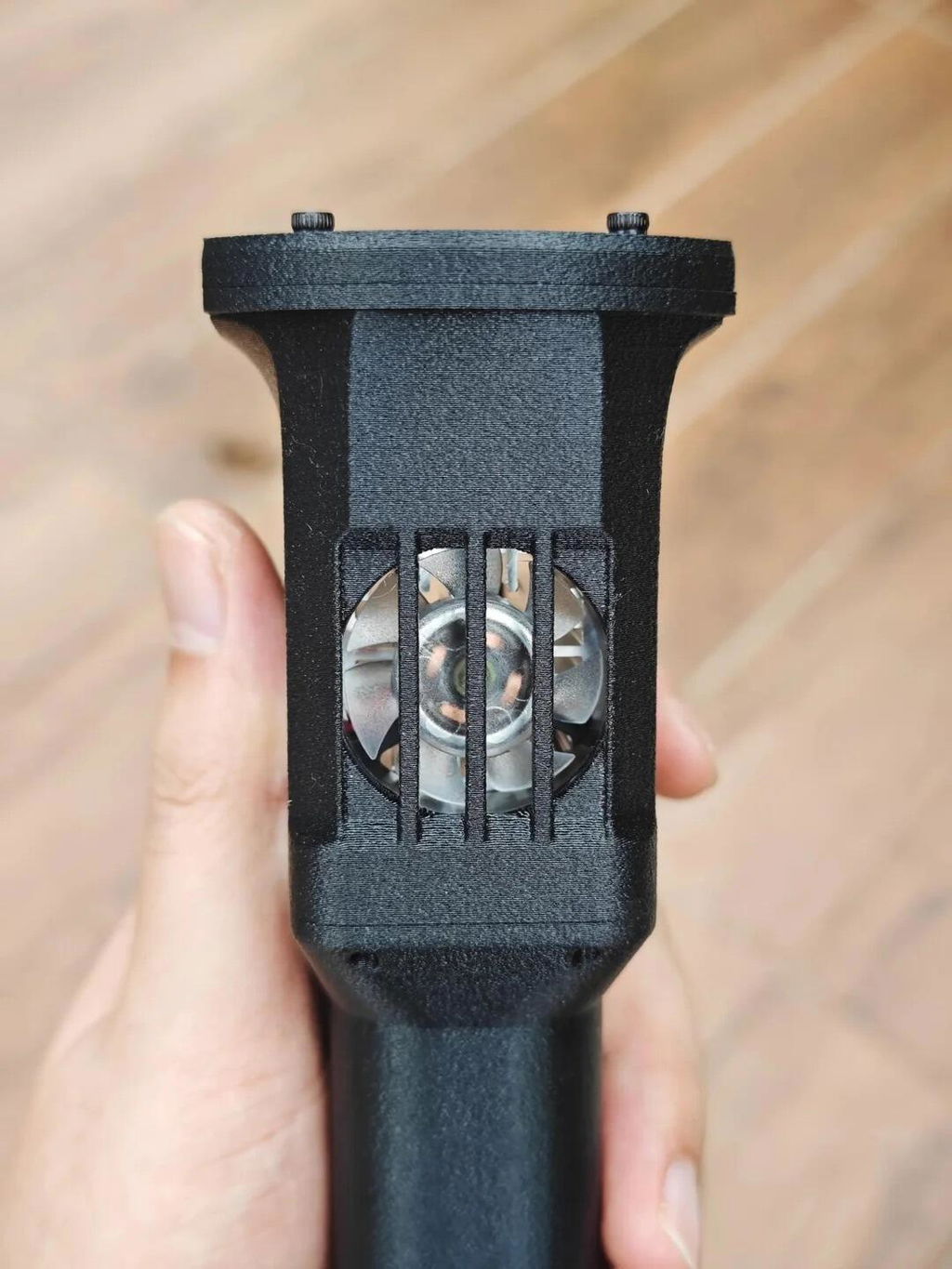
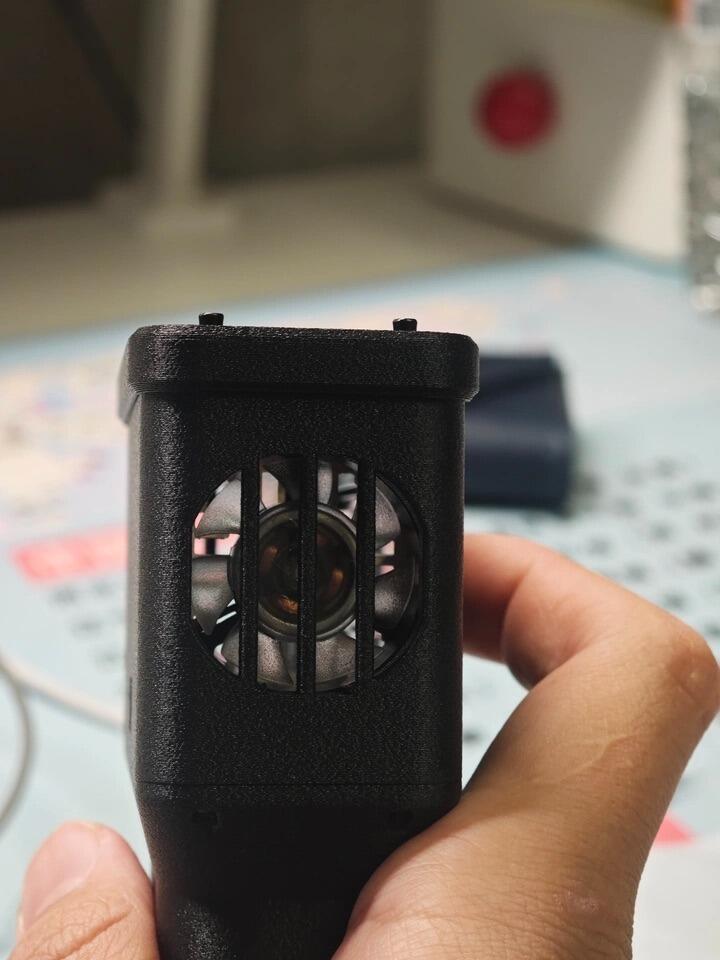
The 60W mode uses a dedicated 30x30x50mm heatsink and a 3010 fan to move heat away from the LED head. High-output mode still produces heat during use.
Yes. Forge 60 is specified around 45W Type-C charge and discharge hardware.
Forge 60 is best for users who are comfortable with simple screw-based assembly and want a repairable, hardware-transparent work light.
Build sheet
| System | Specification | Value | Build note |
|---|---|---|---|
| Light output | Peak mode | 60W / 10000 lm | No planned step-down in the 60W mode under normal handheld use. |
| Runtime | Output ladder | 27 min / 54 min / 8 h | Runtime targets correspond to 60W, 30W, and 3W modes. |
| USB-C power | Charge / discharge | 45W Type-C | Designed for roughly one hour from empty to full charge. |
| Main PCB | Power management | 1.0mm PCB / IP2369 | The charge and discharge IC belongs to the main-board area. |
| LED PCB | Default emitter configuration | Seoul STW0L8PA / 5700K / CRI 70 | Ships with 6V 5050 emitters on a 1.6mm LED board. Contact us for custom emitter types or color temperatures. |
| Thermal stack | Head hardware | 30x30x50mm heatsink / 3010 fan | The lamp-head assembly includes cooling hardware beyond the PCB. |
| Battery bay | Cell format | 2x power 21700 | Compatible with JP40, 40PL, or 45D-class power cells. |
| Housing | 3D-printed shell | PETG-FG | The printed housing and main structural shell use PETG-FG material. |
| Protection | Battery safety | 2S 13A board | Recommended for the standard 60W configuration. |
| Front cover | Lens protection | 74mm glass | Protective glass is part of the front lamp-head stack. |
Open source hardware
git clone https://github.com/BMHX/modelyard-hardware.git
Recommended main control and power board files.
LED board fabrication, placement, schematic, and preview files.
Original Forge 60 EasyEDA Pro hardware source project.
Checklist covering the exact released board files and README notes.
Reference parts list
A compact reference for the original project parts and assembly materials.
| Group | Part | Specification | Qty |
|---|---|---|---|
| Power | Charge / discharge IC | IP2369 | 1 |
| Battery pack | Protection board | 2S 13A, recommended | 1 |
| Battery pack | Alternative protection board | 2S 25A, optional | 1 |
| Battery pack | Power cells | 21700 power cells, JP40 / 40PL / 45D class | 2 |
| Shell | 3D-printed shell set | PETG-FG | 1 set |
| Thermal | Heatsink | 30x30x50mm | 1 |
| Thermal | Cooling fan | 3010 fan | 1 |
| Optics | Protective glass | 74mm, cut or pre-cut | 1 |
| Connector | XT30 male connector | XT30 male | 1 |
| Connector | XT30 female connector | XT30 female | 1 |
| Harness | GH1.25 2P lead | 100mm, single-end lead | 2 |
| Harness | Soft silicone wire | Red / black 2x20AWG | As needed |
| Harness | Soft silicone wire | Red / black 2x16AWG | As needed |
| Fastener | Heat-set insert | M1.4x4x2.3 | 8 |
| Fastener | Heat-set insert | M1.7x4x2.5 | 4 |
| Fastener | Hex screw | 1.4x4, full thread | 8 |
| Fastener | Hex screw | 1.6x4, full thread | 4 |
| Fastener | Self-tapping flat-head screw | M2.6x20 | 4 |
| Assembly | Reflective film | 0.1mm | As needed |
| Assembly | Thermal double-sided tape | 100x100x0.3mm | As needed |
| Assembly | Shock-absorbing foam | 2mm thick, 20mm wide, 5m long | As needed |
| Assembly | High-temperature tape | 20mm wide, 33m long | As needed |
| Assembly | Thermal grease | General-purpose thermal grease | As needed |
| Optional tools | PWLINK2 LITE programmer | Programming tool | 1 |
| Optional tools | 4P 1.25mm probe | Programming probe | 1 |
| Optional tools | Glass cutter | For cutting protective glass | 1 |
| Optional tools | Sanding stick | 240 grit | 1 |
| Optional tools | Hex screwdriver | H1.3 | 1 |
| Optional tools | Hex screwdriver | H1.5 | 1 |
Performance proof
Positioned for short high-output work sessions without automatic step-down under normal use.
Runtime targets for 60W, 30W, and 3W modes give buyers a clear power budget.
Type-C charging and discharge support a compact power workflow with about one hour to full charge.
A 30x30x50mm heatsink and 3010 fan are called out as part of the lamp-head structure.
Performance messaging is tied to concrete build parameters: board thickness, charge IC, battery format, protection board, cooling package, and runtime by power mode.


